Read Testimonials from 2007 Attendees

Exhibitors

Reach over 1,300 news directors, executives, general managers, and reporters by exhibiting at RTNDA@NAB! Your company is guaranteed maximum exposure and one-on-one facetime with the decision makers in the newsroom but allows you to be close to the biggest media convention in the world, the NAB Show. It's the best of both worlds. Contact Rick Osmanski at 202.467.5200 or ricko@rtnda.org. Click here for more info.


Sponsors

RTNDA@NAB is the best opportunity to get your company's name in front of 1,300 potential new customers. Want to make sure that they remember your name and company when they get back to the newsroom? Sponsorship, coupled with exhibiting on the RTNDA@NAB showfloor, is the best way to reach this unique and powerful audience. Contact Contact Thomas J. Corcoran at thomascorcoransr@yahoo.com or 440.543.1548. Click here for more information.


Super Session: What Would Murrow Do?


By Deborah Potter
for RTNDA.org


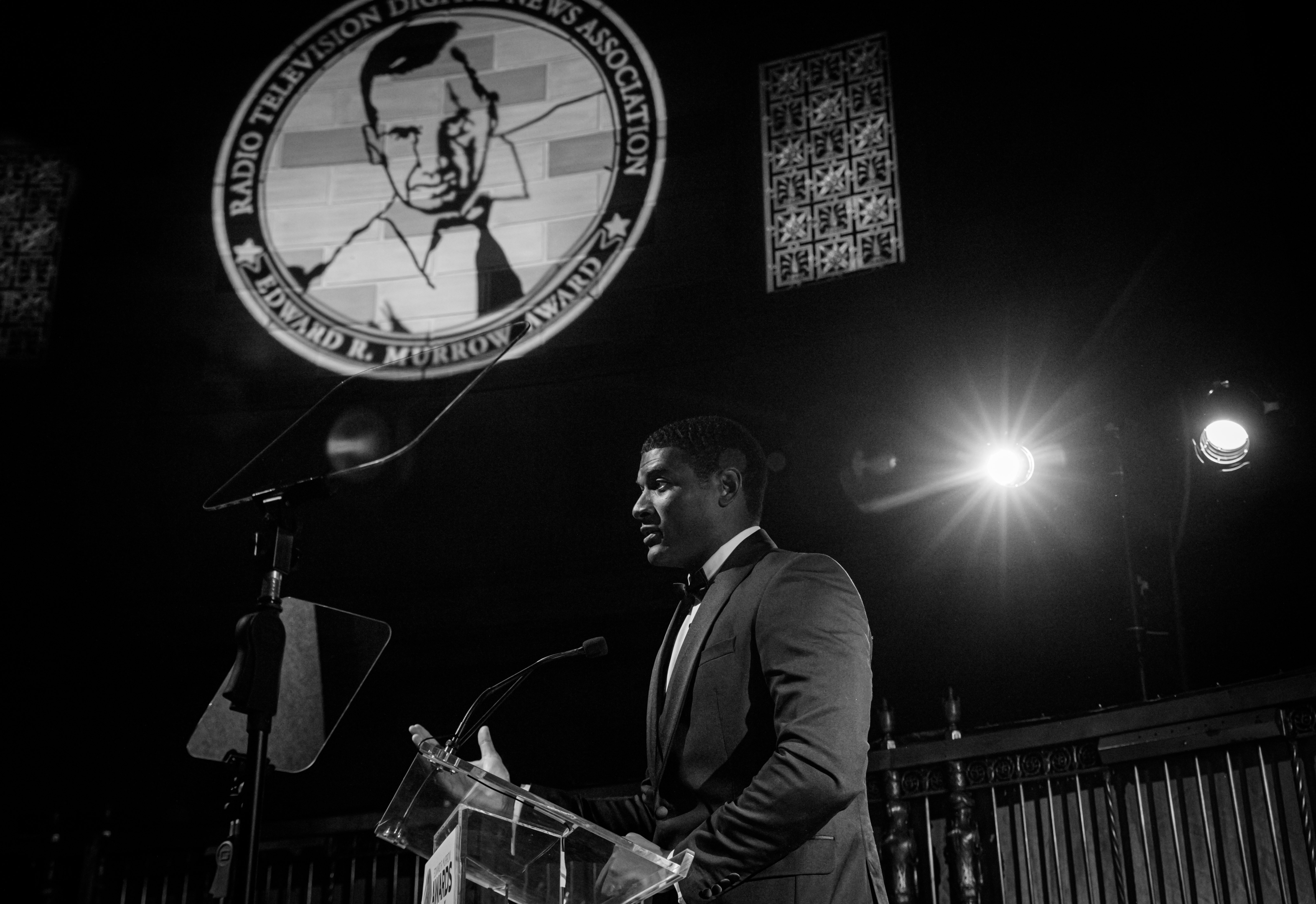
Fifty years after Edward R. Murrow’s famous "wires and lights in a box" speech to the RTNDA convention, a panel of journalists said he’d be disappointed by a lot of what he’d see in the media today. But they also said he would have found new opportunities to do good journalism in this multimedia world.

The session titled "What Would Murrow Do?" during RTNDA@NAB on Wednesday examined how the legendary CBS correspondent would react to the current state of journalism.

"I think he would say everything he predicted [about the three networks] has come true and he would be very depressed," said Stan Cloud, author of The Murrow Boys. "But if you talk about online, cable, I think he would say the opportunity is still there to teach, to inspire, but we’re still not doing it."

"He would have abandoned the networks," said Marci Burdick, senior vice president of Schurz Communications. "He would have his own show on the History Channel or Discovery or PBS and a website for investigations."

Dr. Betty Winfield, author of The Edward R. Murrow Heritage, said Murrow would have embraced today’s new technology, just as he did radio and then television. "At each stage he was the right person at the right time in the right place," she said.

In his RTNDA speech, Murrow said viewers would watch in-depth coverage of issues if the networks would only provide it. "I’m not sure Murrow was right," argued the panel's moderator, ABC News correspondent John Cochran. "He wanted documentaries in prime time. The networks did try that and over the years they got lousy ratings."

What passes for documentaries on network TV today would have baffled Murrow, said KOMU-TV news director Stacey Woelfel. "He’d think it was some kind of weird atomic mutation of what he had in mind, to see a prime time news magazine spend 30 minutes on teenagers pummeling each other."

But CBS Radio president Harvey Nagler said prime time television isn’t the only way the networks serve the public interest. "The world has changed and the standards are different. I’d like to think he would appreciate that."

Nagler said Murrow would be pleased that a radio broadcast he launched 70 years ago, the World News Roundup, is still going strong. But he admitted Murrow would be disappointed in the lack of radio news in many U.S. communities.

Mark Effron, president of Titan TV, pointed out that people today can get more information more quickly from more sources than they could when Murrow spoke in 1958. "We're living in a totally different era," Effron said. "People are going to YouTube political channels and watching candidates' speeches. I take great heart and I imagine Murrow would take comfort that our democracy is thriving in ways he could never even fathom."

Woelfel disagreed. "He'd be horrified at YouTube because people can self select and are not exposed to the entire picture. He'd be horrified that there wasn’t an elite group of journalists deciding what people got to see."

--Deborah Potter is the executive director of NewsLab in Washington.